During the wartime 40's, the L-85 restrictions for garment manufacturing which the WPB (War Production Board) developed in the spring of 1942, had wide repercussions on the garment industry. The restrictions centered on the amounts of fabric to be used in individual garments. This is why we see shorter skirt lengths during the war years. Designers and garment manufacturers also had to become clever in their methods of adding visual interest to a dress.
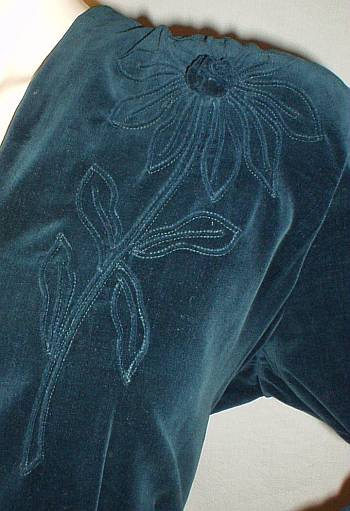
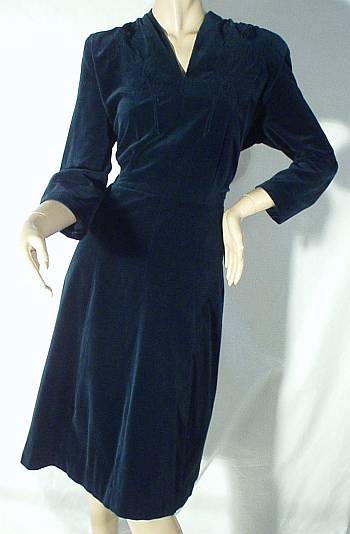
The simple silhouette of this 1940's cotton velveteen dress is made whimsical with the addition of pintucks sewn in the shape of daisies on both sides of the bodice front. This decoration took no extra fabric, save for the small puffed center which is added on top. The pintucks are sewn with a double needle. The seamstress follows a design marked onto the fabric. The tension caused by a single bobbin thread working between the two top threads causes the fabric to raise into a pintuck between the needles. I just love the intricacies involved in the many curves and turns of these daisies.
See this dress and more at Couture Allure Vintage Fashion .